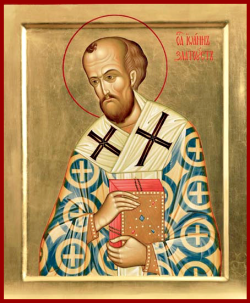
Archbishop
Saint John Chrysostom, Archbishop of Constantinople, was born in Antioch around 347 AD to a military commander. His mother, Anthusa, raised him in the faith. In 367, he was baptized by Saint Meletius, the Bishop of Antioch. After the death of his mother, he embraced monasticism, considering it the 'true philosophy.' In 386, he was ordained as Bishop of Antioch and became an outstanding preacher, earning the title 'Chrysostom' (Golden-Mouthed). In 397, he was summoned to Constantinople following the death of Archbishop Nectarius.
In the capital, he began reforms aimed at the spiritual perfection of the clergy and the improvement of worship. Saint John actively cared for the poor, feeding up to 3,000 widows and maidens. His zeal for the Christian faith led to a conflict with Empress Eudoxia, which ultimately resulted in his exile in 404. After his exile, he continued to write letters and strengthen his spiritual children.
Saint John passed away on September 14, 407, in Armenia, after which his relics were transferred to Constantinople in 438. His incorrupt body was found, and the people lovingly welcomed his relics, asking for forgiveness for the unjust condemnation. Saint John Chrysostom became a symbol of Christian virtue and pastoral care for his flock.
