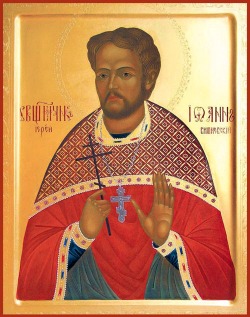
Presbyter
Ivan Vsevolodovich Vishnevsky was born on October 6, 1888, in the family of a priest in the village of Fed'kovka, Yekaterinburg province. He graduated from a spiritual school and one class of a theological seminary. He served in the church of the Verkh-Neyvinsky plant and worked as a teacher. In 1917, he was ordained as a deacon, and in November 1919 – as a priest.
During the first Russian revolution, he was under the surveillance of the tsarist police but was not arrested. He married Yevdokiya Elpidiforovna, a teacher. He was respected in the village, and people turned to him for advice. Local authorities tried to undermine his authority by organizing lectures against religion.
In October 1920, he was arrested on charges of anti-Soviet propaganda. He denied all accusations, pointing to personal grievances with a communist teacher. Despite this, he was convicted and executed on December 2, 1920.
Among the parishioners, questions arose about the reasons for the murders of priests, and Orthodox pastors explained the communists' hatred towards them with the words of the Savior about persecutions.
