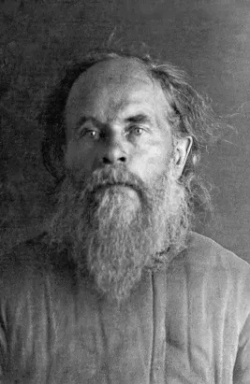
Presbyter
Saint John was born on October 9, 1869, in the village of Vorontsovo, Ryazan province, in the family of a psalmist, Fyodor Lebedev. After graduating from the Ryazan Theological Seminary in 1892, he was appointed as a law teacher at the Pazhinsk Church School. In 1896, he married Nadezhda, the daughter of priest Martin Lipyagov. Soon he was ordained as a priest at the church in the village of Popovichi. In 1910, he was elected a member of the Board of the Zaraysk Theological School and was honored with the rank of protodeacon for his diligent service to the Church.
With the coming to power of the Bolsheviks, persecution of the Russian Orthodox Church began. Father John collected donations to pay taxes so that the church would not be closed. On December 31, 1929, he was arrested for 'collecting funds from citizens.' During interrogations, the priest denied the accusations of anti-Soviet agitation. On February 3, 1930, the OGPU troika sentenced him to three years of exile in the Northern region.
After his exile, Father John served again in the church in the village of Pronyukhovo. In 1933, he was appointed to perform duties in the Church of the Nativity of the Mother of God in the village of Radushino. In December 1936, he appealed to the chairman of the village council for permission to conduct molebens in the homes of collective farmers at Christmas, but was denied. In August 1937, he was arrested and accused of counter-revolutionary agitation.
On September 8, 1937, the NKVD troika sentenced Father John to execution by shooting. He was shot on September 9, 1937, at the Butovo firing range and buried in an unknown common grave. After the arrest, the church in the village was closed, and the parishioners took the icons. Parishioner Pelagia Kostiukhina kept the icon of the Mother of God 'The Inexhaustible Cup' and handed it over to the Blagoveshchensk Church in the city of Zaraysk in the 1960s.
