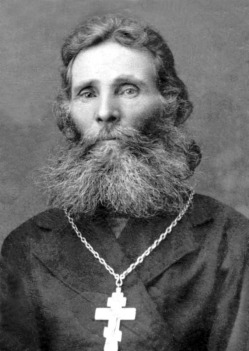
Presbyter
Saint Gregory was born in 1873 in the village of Suvatovo, in the Simbirsk province, into a peasant family. He received his early education at a rural school. Raised according to the principles of Christian faith, he never ceased to care for his spiritual and intellectual formation. In 1917, following the October Revolution, he decided to dedicate his life to the Church and thus began his spiritual struggle.
In 1921, he became a priest and served in the churches of Astrakhan. In 1923, he was entrusted with the ministry of the Church of the Rudnenskaya Icon of the Mother of God in the village of Nachalovo. Father Gregory devoted himself to the spiritual growth of his parishioners, collecting books and distributing them among the faithful.
In 1929, there began persecutions against Christians. Despite these adversities, the people's faith and love for the Church only grew stronger. In 1930, following an attempt by the authorities to remove the church bells, Father Gregory was regarded as an enemy of the state. On 3 February 1930, he was arrested. However, due to a lack of evidence, he was released.
On 22 February 1930, an armed uprising against the Soviet government broke out in the village, resulting in the deaths of members of the local council. Father Gregory was arrested once again and, despite the absence of any evidence against him, was sentenced to death on 28 February. On 6 March 1930, he was executed on the outskirts of Astrakhan and buried in an unknown mass grave.
