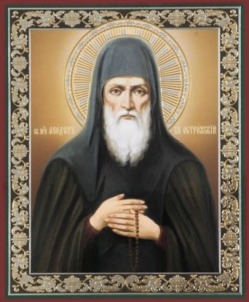
Saint Theodore, Prince of Ostrog, is renowned for establishing churches and defending Orthodoxy in Volhynia against the violence of Papism. He descended from the lineage of the holy equal-to-the-apostles Prince Vladimir through his great-grandson, Saint St. Polikarp-Mikhail, Prince of Turiv. In 1386, the Polish King Jagiełło and the Lithuanian Prince Vytautas confirmed his hereditary possession of the Ostrog district. In 1410, he participated in the defeat of the knights of the Catholic order at Grunwald. In 1422, he supported the Hussites in their struggle against the German Emperor Sigismund. In 1432, having achieved victories over Polish troops, he forced Prince Jagiełło to legally protect the freedom of Orthodoxy in Volhynia. In 1435, he was imprisoned by Prince Swidrygajło, but the people, who loved the saint, raised a rebellion, and he was freed. In 1438, he took part in the battle against the Tatars. In 1440, upon the accession of Casimir to the Polish throne, he received the cities of Vladimir, Dubno, and Ostrog as a vice-regent and became the owner of vast estates. After 1441, he entered the Kiev-Pechersk Monastery, taking monastic vows under the name Theodosius, and labored for the salvation of his soul until his death. The year of his repose is unknown, but he passed away in the second half of the 15th century at a ripe old age. He was buried in the Far Caves of Saint Theodosius. His glorification took place in the late 16th century, when in 1638, Hieromonk Athanasius Kalnofiysky testified that 'Saint Theodore openly rests in the Theodosian cave in whole body.'
