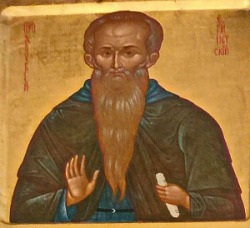
Saint Anubius, the Egyptian hermit, during the persecution of Christians in the 4th century, bravely endured tortures but remained alive and withdrew into the desert, where he lived until old age. He founded a small skete, where he lived with six monks, one of whom was his brother Pimen. After robbers plundered the skete, they took refuge in an abandoned pagan shrine, promising not to speak to each other for a week. Saint Anubius, every morning, threw a stone at the face of the statue of the pagan god, and in the evening said to it: 'I have sinned, forgive me.' After the week was over, the brothers asked Elder Anubius what his actions meant, and the elder explained that just as the statue did not get angry when he struck it and did not exalt itself when he asked for forgiveness, so should the brothers live. Three days before the death of Saint Anubius, the hermits Sur, Isaias, and Paul visited him, asking the elder to tell them about his life for the edification of the faithful. The saint replied: 'I do not remember having done anything great and glorious.' Yielding to the earnest requests of the questioners, he nonetheless, with deep humility, recounted that after he confessed the Name of Christ before the torturers during the persecution, he never defiled his mouth with unjust words, for having once confessed the Truth, he did not want to utter a lie. His heart was always filled with a thirst for communion with the Lord, and he often beheld Angels and the holy servants of God standing before the Lord; he saw Satan and his angels, condemned to eternal fire; he was also shown the righteous, enjoying eternal bliss. On the third day, Saint Anubius departed to the Lord in spiritual joy. As his soul ascended to Heaven, angelic singing was heard in the air.
